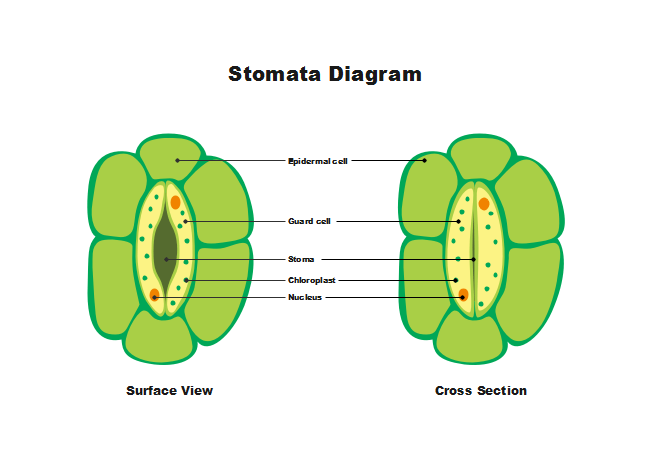
In botany, a stoma (also stomate; plural stomata) is a tiny opening or pore that is used for gas exchange. They are mostly found on the under-surface of plant leaves. … Air enters the plant through these openings. The carbon dioxide is used in photosynthesis.
Types of stomata
Function of Stomata
They are pores surrounded by specialized parenchymatic cells, called guard cells. Stomata have two main functions, namely they allow for gas exchange acting as an entryway for carbon dioxide (CO2) and releasing the Oxygen (O2) that we breath. The other main function is regulating water movement through transpiration.
Stotamata opening and closing
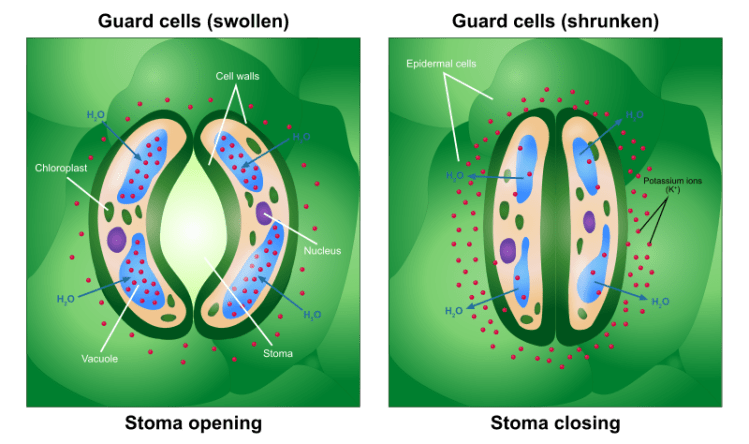
However, most plants do not have the aforementioned facility and must therefore open and close their stomata during the daytime, in response to changing conditions, such as light intensity, humidity, and carbon dioxide concentration. It is not entirely certain how these responses work. However, the basic mechanism involves regulation of osmotic pressure.

 science